Divisi

Cassava is your dry-year insurance — plant it this season. If you farm in Zambia's drier south, west or north-west, El Niño is likely to bring below-average rain and a late start to the October 2026–May 2027 season, so back your maize with a crop that shrugs off dry spells (FEWS NET). Cassava makes a harvest on land and rainfall that would leave a maize field bare.
Will El Niño hit my part of Zambia?
It depends on your province, so plan for your zone — not the national headline. FEWS NET expects below-average rainfall and a delayed onset for 2026–27, with the Southern, Western and North-Western provinces most exposed to erratic rain and hotter days, while the Northern, Central and Luapula areas usually hold up better (FEWS NET). If you are in the drier belt, treat every rain as money — and before you plant, learn to read the seasonal forecast for your own zone instead of trusting a single headline. New to how this works? Start with what El Niño means for your farm.
How do I prepare my land now, in the dry season?
Prepare while the soil is still workable, so you can plant on the first good rains. In a dry year the winning move is to catch and hold water in planting basins (potholing) rather than plough the whole field flat.
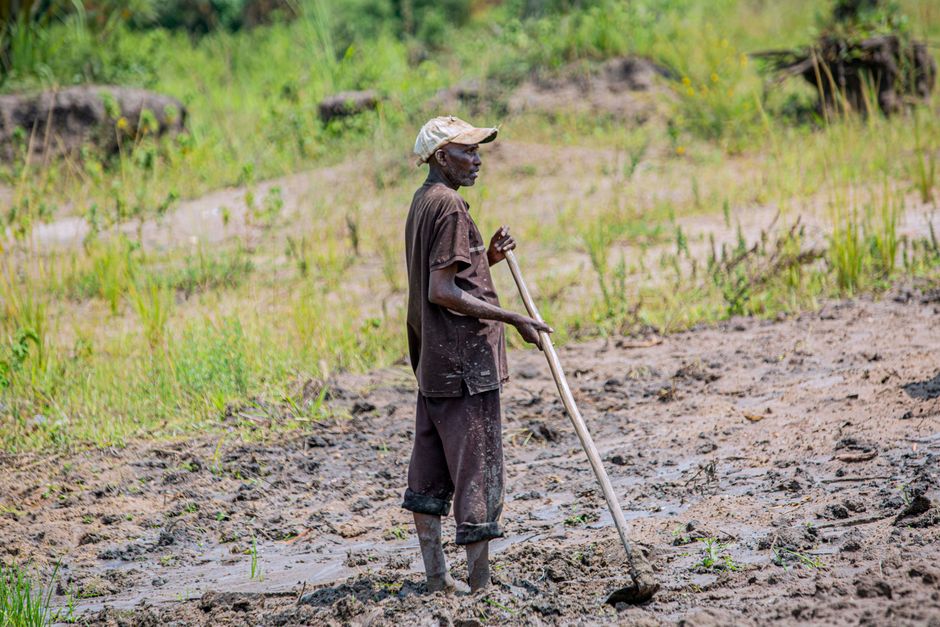
Photo: Safari Consoler / Pexels
Your dry-season checklist:
- Mark permanent planting basins on a grid now — the full Pfumvudza-style basin method is in our Zimbabwe land-prep guide, so we won't repeat it here.
- Line each basin with compost or manure to feed the crop and hold moisture (build soil that holds water).
- Gather dry grass and crop residue for mulch; a covered basin loses far less water (smart water use).
- Cut healthy, pencil-thick cassava stems and stack them in shade, ready for the rains.
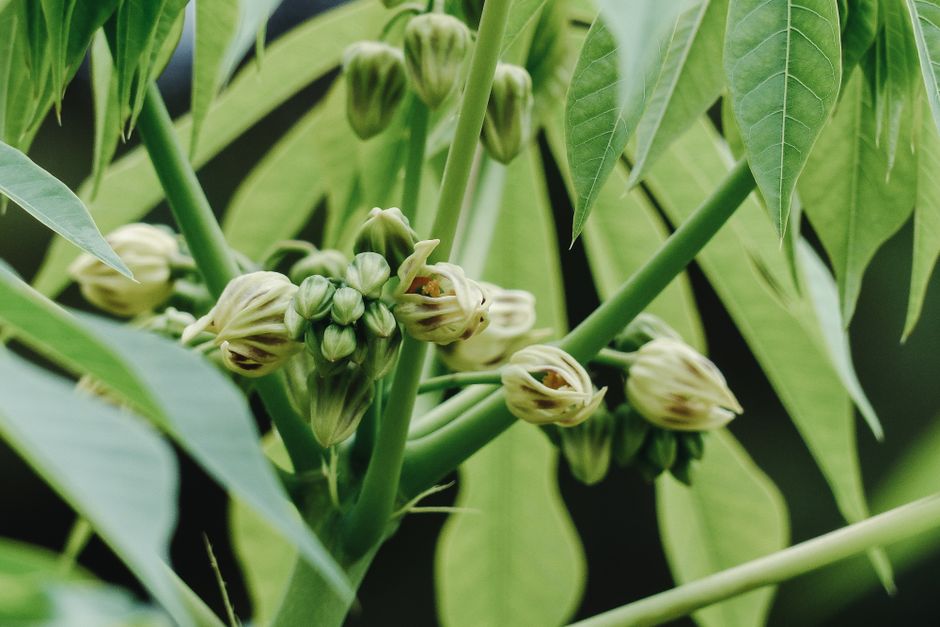
Photo: Atypeek Dgn / Pexels
No-tool moisture check before planting: dig to a hand's depth (about 15 cm) and squeeze a handful of soil. If it holds its shape and darkens your palm, there is enough moisture to plant.
Why does cassava survive dry spells when maize fails?
Cassava is built to wait out drought. When water runs short it sheds older leaves and closes its pores in the afternoon heat to cut water loss, and sends roots below 2 m to reach deep water (Frontiers in Physiology). It still yields on as little as 400 mm of rain a year, where maize gives up (FAO) — in hot, low-water conditions it out-yields maize, beans, millet and sorghum (GAFSP).
Best of all, the roots are a food bank in the ground: leave them from 6 months up to 2 years and lift them when you need food or a sale (FAO). That flexibility turns a bad rain year into a manageable one.
Which cassava varieties should I plant in Zambia?
Plant an improved ZARI variety, not just old local stems — improved cassava yields about 2.7 times more (FAO). Zambia's released varieties include Bangweulu, Kapumba, Nalumino, Mweru, Chila, Tanganyika and Kampolombo.
| What you get | Old local stems | Improved ZARI variety |
|---|---|---|
| Root yield | ~4 t/ha (about 44 × 90 kg bags) | ~11 t/ha (about 120 × 90 kg bags) |
| First harvest | 20+ months | 13 months (Mweru) |
Yields and timing from the FAO Zambia cassava value-chain study.
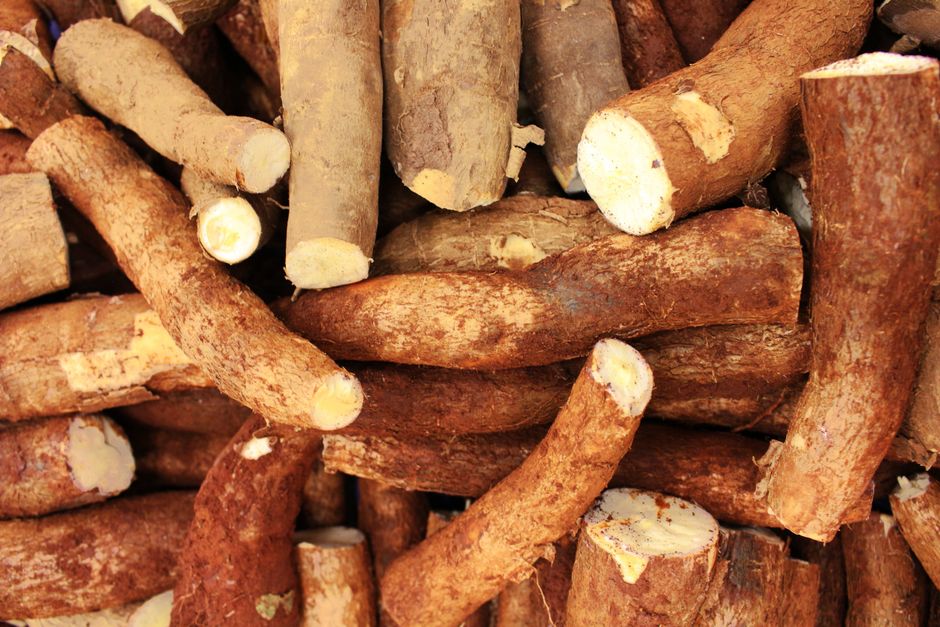
Photo: Daniel Dan / Pexels
Get clean stems from an extension officer or one of Zambia's 58 seed-bulking farms (GAFSP). Also ask for the yellow, vitamin-A cassava and mosaic-resistant lines IITA is bringing in.
How do I add cassava without dropping my maize?
Keep your maize and add cassava as a buffer — don't bet the whole farm on one crop. Cassava isn't your only dry-year hedge, either: drought-tolerant grains like sorghum and millet spread the risk further.
- Keep your best, best-drained land for a drought-tolerant maize (see maize in a dry year).
- Put cassava on a separate block — aim for 20–40% of your area — as your fallback.
- Intercrop young cassava with an early legume (cowpea or groundnut) while the canopy is still open.
- Stagger planting so you always have roots at different ages to lift.
- Dry some as chips to sell when prices climb — only about 8% of Zambia's cassava is marketed today, so there's room (Lusaka Times).
Over 350,000 Zambian smallholders already grow cassava, and about 30% of the country eats it as a staple (Lusaka Times) — you'd be joining a proven market, not experimenting.
Your next step this week
Walk your fields and pick one block for cassava. Then track down clean improved stems — Bangweulu, Mweru or Kampolombo — from an extension officer or seed-bulking farm, and cut and shade your cuttings so they are ready the moment the rains arrive.