Divisi

Between November and February, while most of Nigeria and Ghana waits out the dry Harmattan, fadama and valley-bottom farmers are running their busiest, most profitable season. Dry-season vegetables sell into thin supply and fat demand — Ramadan and Christmas both land inside this window — and a well-run plot on a shallow well or washbore can out-earn a full rainy-season maize crop. Here's how to run it as a business.
What is fadama or valley-bottom irrigation, and how do shallow wells and washbores work in the dry season?
Fadama is the Hausa word for the seasonally flooded river floodplains that thread across northern and central Nigeria — the same kind of low-lying, high-water-table land that Ghanaians farm as valley-bottom plots around irrigation sites like those studied in the Upper East Region, and that farmers further south and east in Africa call dambo. The rains recharge the water table by September; through November–February that residual moisture sits close enough to the surface that you don't need a river pump to reach it.
Two structures do the job:
- Shallow hand-dug wells (2–6 m deep, lined with concrete rings or old drums) where the water table is close to the surface — common on the edges of fadama plots.
- Washbores (hand-augered tube wells, often 3–8 m, cased in PVC) where the well needs to go a little deeper or the soil is too loose to hold an open pit.
A Sokoto State study of fadama vegetable growers found the system genuinely pays: dry-season vegetable farmers there averaged a gross margin of about ₦190,024 per hectare and a 97% rate of return on every naira invested (Sokoto fadama profitability study, Journal of Development and Agricultural Economics). The same wetland logic underpins valley-bottom and dambo irrigation across the continent — it retains enough moisture to crop through the dry months even when the surrounding land is bone dry (FAO Zimbabwe country paper on wetland/dambo systems). If you're weighing a well against a pump-fed drip kit, see the treadle- and drip-pump comparison in small-scale irrigation for the dry spell rather than duplicating that cost table here.
No-tool field test for a viable well site: dig a test hole 1 m deep at the start of the dry season. If it's damp to the touch or seeping by 60 cm, a shallow well will hold water through February. If it's dust-dry past 1 m, you need a washbore, not a hand-dug well.
Which vegetables actually pay in the Harmattan window in Nigeria and Ghana?
Not every vegetable is worth the water. The ones that consistently pay are short-cycle, heat- and dust-tolerant, and hit the market when the rainy-season glut has cleared.
| Crop | Local measure | Days to first harvest | Why it pays in the Harmattan window |
|---|---|---|---|
| Tomato (Solanum lycopersicum) | Crate (~25–45 kg) | 75–90 | Rainy-season blight wipes out competing supply; dry-season fruit stores and transports better |
| Pepper — tatase (Capsicum annuum) and shombo (Capsicum frutescens) | Mudu (~2.5 kg, Nigeria) | 90–120 | Two distinct market classes — tatase for stew base, shombo for heat — both hold value through the dry months (genetic characterisation of Nigerian shombo pepper) |
| Onion (Allium cepa) | Mudu / olonka (~1.8 kg, Ghana) | 90–120 (bulbing) | Classic dry-season crop; pairs with post-harvest storage economics covered in growing and storing onions off-season |
| Okra (Abelmoschus esculentus) | Mudu / olonka | 55–65 | Fast cash crop between main plantings; tolerates dust and heat well |
| Amaranth / ugu leaf (Amaranthus spp. / Telfairia occidentalis) | Bundle | 25–35 | Quickest turnaround of the list; keeps cash flowing while tomato and pepper mature |
| Garden egg (Solanum aethiopicum) | Mudu / olonka | 80–100 | Steady local demand, less disease pressure than tomato in the dry season |
Rotate the fast leafy crops (amaranth, ugu, okra) between rows of the slower fruiting crops so the plot earns cash every few weeks, not just at one harvest.
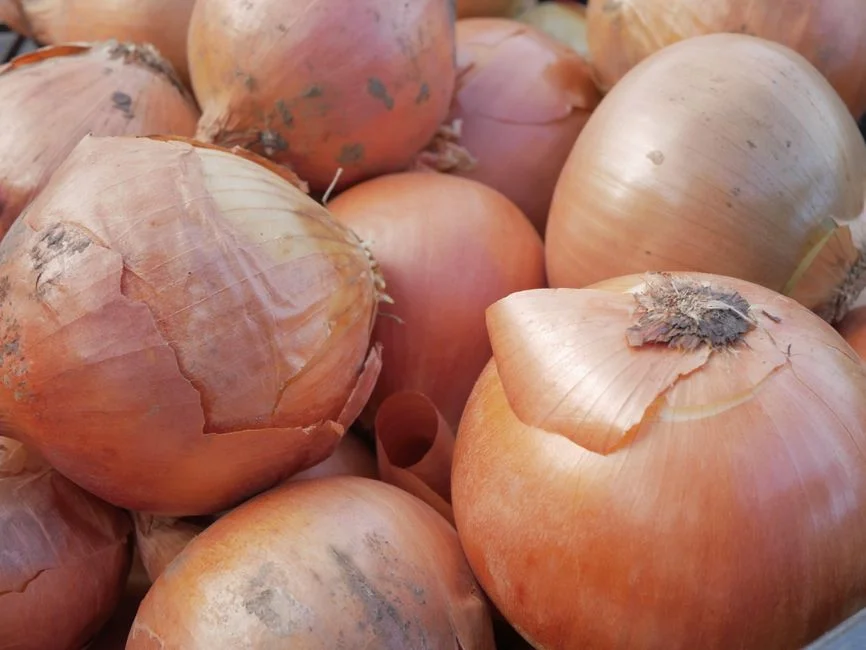
Photo: Vector Box / Pexels
How does Harmattan dust and cold nights affect flowering and fruit set?
Two Harmattan stresses hit fruiting vegetables at once, and both show up as flowers dropping instead of setting fruit:
- Dust on the leaves cuts light penetration and blocks stomata, the pores leaves use to breathe — a Nigerian study on dust-affected leaves recorded stomatal conductance falling by 60–87% on heavily dusted plants, with a matching drop in chlorophyll (dust deposition study on Nigerian crop leaves). Less light and gas exchange means less energy for flowering and fruit fill.
- Cold Harmattan nights below about 13°C damage tomato pollen and stall pollen-tube growth, causing blossom drop just as reliably as daytime heat above roughly 29°C does (Missouri IPM tomato fruit set guide).
What to do about it:
- Rinse dust off leaves with a light overhead splash from your watering can early morning, every 7–10 days during peak Harmattan — you're not irrigating, just clearing the pores.
- Mulch the base of tomato and pepper rows with dry grass or crop residue; it cuts dust rebound onto lower leaves and holds soil moisture between waterings.
- On upland or northern sites where night temperatures drop below 13°C on more than half the nights in November, delay transplanting tomato and pepper by 2–3 weeks into December rather than fighting cold-set blossom drop.
No-tool field test: wipe a leaf with a damp cloth. If the cloth comes away visibly grey, dust load is high enough to be cutting yield — rinse that week, don't wait for the next scheduled watering.
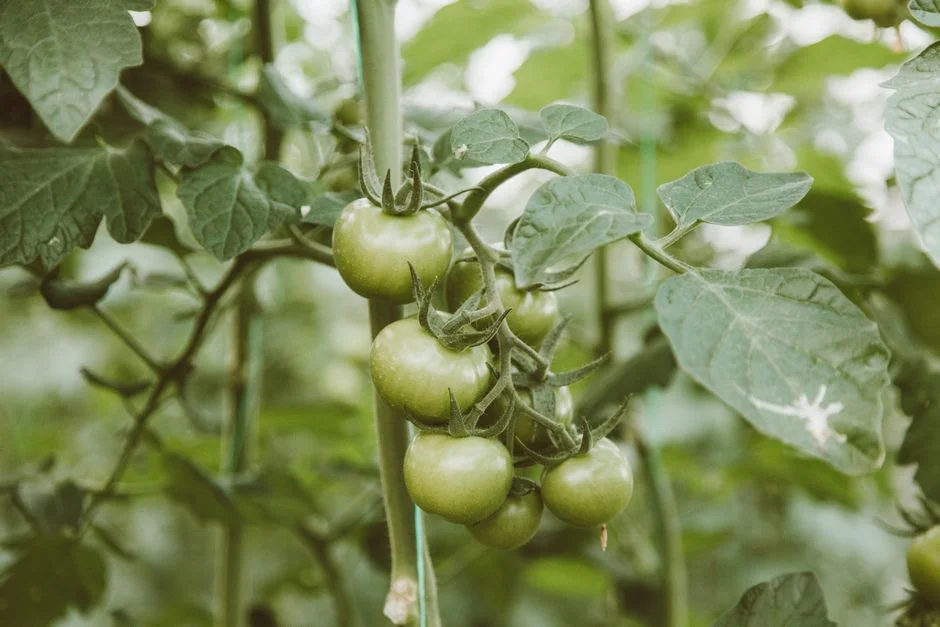
Photo: Roman Odintsov / Pexels
How do I manage tuta absoluta and whitefly without losing my whole crop?
The tomato leafminer Tuta absoluta and the whitefly Bemisia tabaci are the two pests most likely to wreck a Harmattan tomato or pepper crop, and both build up fast in the dry, warm conditions of this window.
Tuta absoluta tunnels inside leaves, stems and fruit — look for pale, winding mines and black frass (droppings) on young leaves. Left unmanaged it can destroy 80–100% of a tomato crop; Nigerian growers lost up to 80% of theirs in a single bad 2016 season (review of Tuta absoluta management in Africa). Bemisia tabaci whitefly sucks sap, excretes sticky honeydew that grows sooty mould, and — more seriously — spreads viruses between plants; the recommended action threshold is spraying once you count three or more nymphs on the underside of a single leaf (CIP Risk Atlas for Africa, Bemisia tabaci).
Work through both pests in the same order, cheapest and safest first:
- Sanitation — remove and destroy (burn or bury deep) infested leaves, fruit and old crop residue at the end of every season; both pests carry over on volunteer plants and debris.
- Cultural — rotate away from tomato/pepper/garden egg (all in the nightshade family) for at least one season on any plot with a bad outbreak; keep row spacing open enough for airflow to dry dew and slow whitefly buildup.
- Monitoring — inspect the underside of young leaves twice a week; a grey/wet-looking cloud of tiny flies rising when you shake a plant is your whitefly cue, mines with black frass are your Tuta absoluta cue.
- Biological/botanical — neem-based sprays and conserving natural enemies (parasitic wasps, predatory mirid bugs) suppress both pests without wiping out the beneficials you need.
- Chemical, last resort — rotate chemical classes to slow resistance, spray in the cool of early morning or evening, and always respect the label's pre-harvest interval before you pick.
What does a treadle pump or small petrol pump really cost to run?
Your pump choice is really a fuel-versus-labour decision, and Harmattan fuel prices make that trade sharper than in the rains.
| Pump type | Upfront cost profile | Running cost | Best fit |
|---|---|---|---|
| Treadle pump (foot-powered) | Higher one-off cost, no fuel | Your own labour only | Plots up to roughly 0.4 ha where labour is available and cash is tight |
| Small petrol pump | Lower upfront, ongoing fuel | Litres of petrol per irrigation session | Larger plots or where hired labour costs more than the fuel |
Petrol in Nigeria has been trading in the ₦1,500-per-litre range through 2026 (Channels Television, average petrol price) — a pump running even an hour a day across the season adds up to a real line item. Budget it explicitly:
- Cost your fuel per irrigation round, not per litre — know exactly how many rounds a full tank buys on your plot size.
- If fuel cost per round is eating more than a third of what that round's harvest will sell for, a treadle pump or shared/hired pump time usually wins on margin, even accounting for the extra labour.
- Time pump-watering to early morning or dusk — cooler air means less evaporation loss, so the same fuel or the same number of treadle strokes waters more crop.
When should I time harvest for the Ramadan and Christmas price peaks?
Two demand spikes sit inside the Harmattan window, and timing your planting to hit them — rather than the general glut afterward — is where the real margin sits.
- Christmas (late December): tomato, pepper and onion demand rises sharply for festive cooking. Plant tomato and pepper in September–October to have fruit ready by December.
- Ramadan (starts 8 February 2027): demand for tomato, pepper and onion climbs again for the pre-dawn and evening meals; Nigerian traders have repeatedly reported tomato prices soaring once the Ramadan-driven harvest glut clears (Ramadan 2027 dates; post-Ramadan tomato price reporting, Nigeria). Plant a second round in November–December to be picking through January into February, ahead of that price firming.
Staggering two plantings — one for Christmas, one for Ramadan — spreads your labour and pump-fuel load and means you're not selling your whole crop into the same week as every other fadama farmer on the scheme.
What's a realistic gross margin for a dry-season vegetable plot in naira and cedi?
Nigeria — a quarter-hectare (0.25 ha) fadama tomato/pepper plot:
Sokoto State fadama vegetable growers averaged a gross margin of ₦190,024 per hectare (Sokoto fadama profitability study). Scaled to a typical quarter-hectare smallholder plot, that's roughly ₦47,500 in gross margin for the season — before you weigh in your own fuel-versus-labour pump choice above.
Ghana — a valley-bottom plot growing pepper, onion, tomato and garden egg:
A technical-efficiency study of dry-season vegetable farmers in Ghana's Upper East Region recorded average costs of GHS 5,864 per hectare (labour GHS 4,182, irrigation GHS 807, seed GHS 245, fertiliser GHS 359, agrochemicals GHS 271) against an average output value of GHS 8,449.86 per hectare (Ghana Upper East dry-season vegetable study, PLOS ONE) — a gross margin of roughly GHS 2,586 per hectare from those figures, on a plot mix of exactly the crops in the table above.
| Nigeria (fadama, per ha) | Ghana (valley-bottom, per ha) | |
|---|---|---|
| Output value | Not separately reported | ~GHS 8,450 |
| Total input cost | Not separately reported | ~GHS 5,864 |
| Gross margin | ~₦190,024 | ~GHS 2,586 |
Your own numbers will move with plot size, crop mix and how much of your water comes from free labour on a treadle pump versus paid fuel — but both figures confirm the same thing: a well-run Harmattan vegetable plot on fadama or valley-bottom land is one of the higher-margin uses of a small plot available to you this season. For the wider picture on why this window matters across the region, see dry-season vegetable farming income, Nigeria's north–south dry-season story, and Ghana's 2026 bimodal rains outlook.
Your next step this week
Dig your test hole: 1 m deep, checked for dampness, at the spot you're considering for a shallow well or washbore — that single check tells you whether this season's fadama or valley-bottom plot is viable before you spend a naira or cedi on seed.